
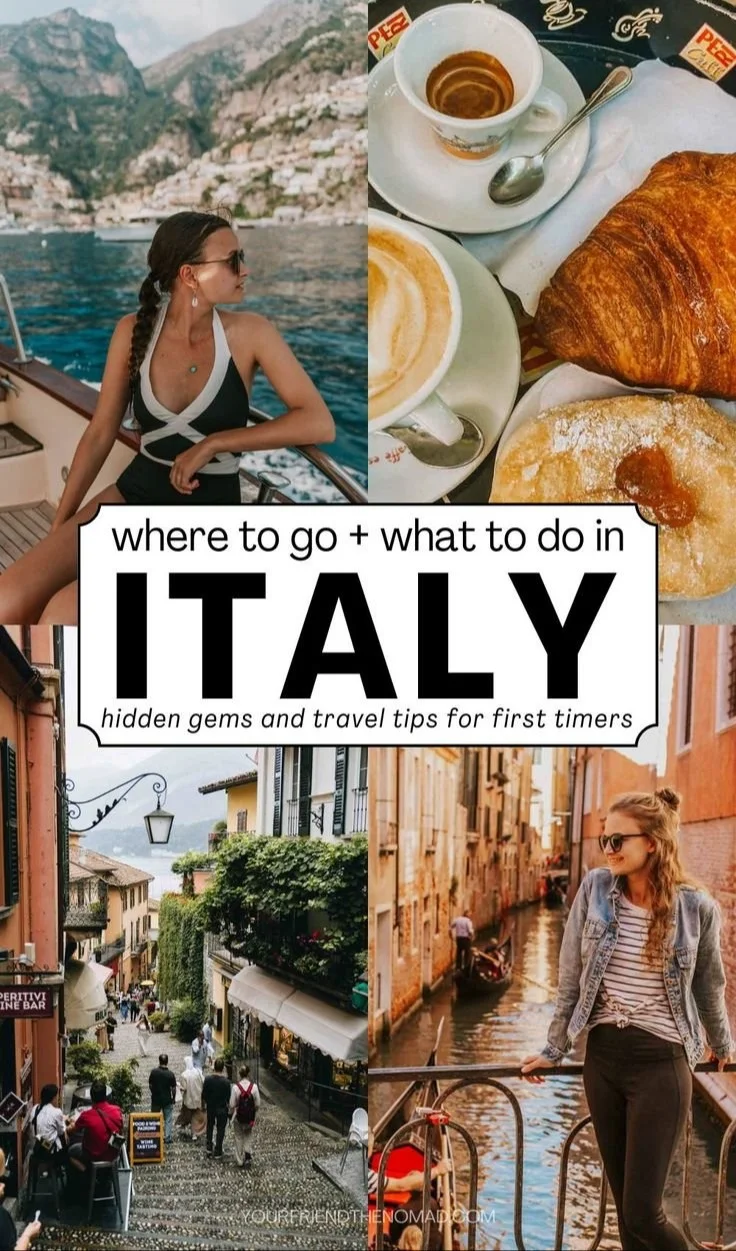
- Big three (Rome, Florence, Venice): Classic for a reason — art, architecture, and cuisine. Ideal for a first trip of 7–10 days.
- Northern Italy (Milan, Lake Como, Cinque Terre): Great for design, fashion, lakes and dramatic coastline hikes.
- Southern Italy (Naples, Amalfi Coast, Sicily): Best for food explorers and sun-seekers who want fewer crowds.
- Combine slowly: Pick 2–3 hubs and travel between them by train (fast and scenic) rather than packing too many short stops.
- Best months: April–June and September–October for pleasant weather and fewer crowds.
- Peak season: Mid-July to August is hot and busy; some small businesses close for August holidays.
- Trip length: 7–10 days is a comfortable first trip to see a few highlights; two weeks lets you add a region or slow down.
- Flights: Book 2–4 months ahead for best prices to major airports (Rome FCO, Milan MXP, Venice VCE).
- Trains: Regional trains don’t need reservations; high-speed trains (Frecciarossa, Italo) should be reserved in advance for best fares.
- Museums and attractions: Reserve timed tickets for the Vatican Museums, Uffizi, Accademia (David), and other top sites weeks ahead in high season.
- Accommodations: Choose central neighborhoods to minimize transit time; apartments are useful for longer stays or food-focused trips.
- Trains: The backbone of intercity travel — fast, frequent, and comfortable.
- Cars: Rent a car only if exploring rural areas, southern coasts, or islands; city driving, limited-traffic zones (ZTL), and parking are challenging.
- Public transit: Cities have good buses, trams, and metros; buy multi-day passes when helpful.
- Taxis and ride apps: Taxis are metered; preferrable to use official stands. Apps like FreeNow operate in some cities.
- Rome: Trastevere for atmosphere, Centro Storico for walking access, or Prati for calmer streets near the Vatican.
- Florence: Historic center within walking distance of most sights; Santo Spirito for a livelier, local feel.
- Venice: San Marco for proximity, Dorsoduro for museums and cafés, Cannaregio for quieter evenings.
- Meals: Eat where locals go — look for full tables and handwritten menus. Start with aperitivo (pre-dinner drinks and small bites).
- Tipping: Not obligatory. Small change or rounding up is appreciated for good service.
- Dress: For church visits, shoulders and knees should be covered. Otherwise, Italians dress smartly; “tourist casual” is fine but avoid beachwear in towns.
- Currency: Euro. Notify your bank and carry a mix of card and small cash.
- ATMs: Widely available — use bank ATMs.
- Phones: Buy a local SIM or rely on eSIM/data plans for maps and translations.
- Safety: Italy is generally safe; beware pickpockets in crowded tourist spots and on trains.
- Comfortable walking shoes and a light rain layer.
- Outlet adapter (Type C/F) and a portable charger.
- Light layers for variable weather and evenings.
- A small daypack and a secure money belt or RFID-blocking wallet.
- Slow down: Spend afternoons people-watching with a gelato instead of trying to cram another museum.
- Reservations: For popular restaurants, book an evening slot — many are fully booked on weekends.
- Learn a few phrases: A polite “Buongiorno,” “Per favore,” and “Grazie” go a long way.
- Be flexible: Expect some things to be different than home — embrace the rhythm.
Conclusion
If you’re undecided about using a travel agent versus planning everything yourself, check out this useful forum discussion on whether to use a travel agent or plan your own trip to weigh options and read experiences from other travelers.2026 Planning Update for Trip To Italy
A stronger trip to Italy plan starts with intent. Decide whether the trip is about price, scenery, comfort, food, events, outdoor access or a specific bucket-list moment. That decision makes the rest of the planning easier because every hotel, transfer and activity can be judged against the same goal.
For 2026, travelers should also compare total trip cost instead of only headline prices. A cheap hotel can become expensive if transport is weak, while a slightly higher nightly rate can save money if it includes breakfast, transit access or a better location.
Budget and Booking Tips
- Book refundable accommodation early, then keep comparing prices.
- Check airport, train or bus access before choosing where to stay.
- Plan one main paid experience per day instead of overloading the itinerary.
- Use grocery stops, local transport and shoulder-season dates to control costs.
- Keep a small buffer for weather, delays, luggage storage or last-minute transfers.
Internal Planning Links
- Bansko Bulgaria Digital Nomad Cost: 5 Tips for Budget Living
- Albania vs Croatia Budget 2026: 5 Tips for Smart Travelers
- Amazing Budget-Friendly Rail-Linked City Pairings in Europe
Official Resource to Check
Before finalizing the trip, check an official resource for current rules, entry requirements, park access, event details or health guidance: U.S. State Department international travel information.
Common Mistakes to Avoid
The most common mistake is planning from one viral photo or one cheap price. A useful itinerary checks distance, opening times, weather, local holidays, transfer costs and whether the experience still works if plans change.
Another mistake is ignoring the first and last day. Arrival and departure days often decide whether a trip feels smooth or stressful, so keep them lighter and avoid booking the most important activity immediately after a long transfer.
FAQ
How do you plan trip to Italy on a budget?
Start with flexible dates, compare accommodation outside the most expensive zone, check transport before booking and keep one paid activity as the main highlight.
What should you check before booking trip to Italy?
Check season, local transport, cancellation rules, official travel updates, safety requirements and whether the final cost includes food, transfers and extra fees.
Is trip to Italy worth it in 2026?
Yes, if the trip matches your budget, season and travel style. A focused itinerary usually gives better value than trying to visit too many places at once.